Table of Contents
Business VoIP Phone Systems: A Complete Buyer’s Guide
Choosing the right business phone system impacts how customers reach you, how your team collaborates, and how your business scales. Modern VoIP phone systems give businesses more flexibility, reliability, and insight than traditional phone systems ever could.
This guide walks through what business VoIP phone systems are, why companies are switching, and how to decide if VoIP is the right move for your organization.
What Is a Business VoIP Phone System?
A business VoIP phone system allows organizations to make and receive phone calls over an internet connection instead of traditional copper phone lines.
Unlike consumer calling apps or residential VoIP, business VoIP systems are designed for professional environments. They support multiple users, departments, and locations while offering structured call handling and centralized management.
Business VoIP systems are also built to scale. As teams grow or locations expand, users and features can be added without replacing phone hardware or rewiring offices.
Key characteristics of business VoIP systems include:
-
Cloud-based call management
-
Support for desk phones, computers, and mobile devices
-
Advanced call routing and automation
-
Centralized administration and reporting
In practice, this means a call can ring a front desk phone, a sales rep’s laptop, and a manager’s mobile app at the same time - while leadership can still see call volume, wait times, and missed calls in one dashboard. Call queues benefit businesses by placing callers in an organized line instead of sending them to voicemail, helping teams answer more calls during peak periods.
Why Are Businesses Replacing Traditional Phone Systems With VoIP?
Businesses are replacing traditional phone systems because legacy technology becomes harder to manage as operations grow.
Traditional systems rely on on-site hardware and manual configuration. Simple changes—such as adding a new employee, rerouting calls, or supporting a second location—often require outside vendors, added costs, or downtime.
Many businesses also rely on traditional answering services, which were once helpful but are increasingly outdated. These services often lack visibility, flexibility, and real-time integration with your internal team, creating delays instead of improving response times.
VoIP removes these limitations by shifting phone systems to the cloud, where changes can be made quickly and systems adapt as business needs evolve.
Businesses commonly switch to VoIP to better support:
-
Remote and hybrid work environments, where employees need to answer business calls from anywhere
-
Multi-location operations, without managing separate phone systems
-
Faster response times and better customer experience, through smarter call routing
What Problems Do Business Owners Experience With Outdated Phone Systems?
Outdated phone systems often fail quietly until they start affecting customers and revenue.
As businesses grow, owners frequently encounter missed calls, confusing call paths, and limited visibility into how calls are being handled. Without reporting or analytics, it’s difficult to know whether calls are being answered promptly or routed correctly.
Common business phone system problems include:
-
Calls going unanswered or to the wrong department
-
No visibility into call volume or performance
-
Inconsistent customer experience across locations
-
Employees relying on personal phones for work calls
For example, a customer may call twice, get voicemail both times, and never receive a callback while leadership has no data showing the missed opportunity.
These challenges strain internal teams and frustrate customers who expect fast, professional responses.
How Does a Business VoIP Phone System Work?
A business VoIP phone system converts voice into digital data and securely transmits it over an internet connection.
Calls are routed through cloud-based servers rather than physical phone lines. This allows employees to answer calls from desk phones, computers, or mobile devices using the same system without being tied to a single office.
Because the system is centralized, businesses can easily control call routing, user permissions, business hours, and voicemail settings from one platform instead of managing physical equipment.
Is VoIP Reliable Enough for Business Use?
Yes. Business-grade VoIP systems are designed to meet reliability expectations for professional environments.
Modern VoIP platforms use redundant infrastructure, automatic failover, and intelligent call routing to maintain service during disruptions. If an office loses power or internet access, calls can automatically reroute to mobile devices or alternate locations.
Reliability advantages of VoIP include:
-
Redundant data centers that prevent single points of failure
-
Automatic call forwarding during outages
-
Faster recovery than traditional phone systems
In real-world scenarios, this means customers can still reach your team even if a physical office is temporarily offline.
What Features Do Most Business VoIP Phone Systems Offer?
Business VoIP systems include features designed to improve efficiency, professionalism, and customer experience - far beyond basic calling.
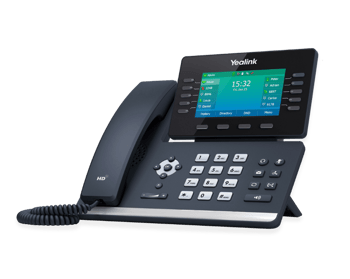
Common business VoIP features include:
-
Auto attendants and call menus to guide callers to the right department
-
Call routing, ring groups, and queues to reduce missed calls
-
Voicemail-to-email and transcription for faster follow-up
-
Mobile and desktop calling apps for flexible work
-
Call analytics and reporting to track performance
Together, these features help ensure calls are answered quickly, routed correctly, and measured while also boosting your team’s productivity by reducing interruptions, eliminating manual call handling, and giving employees better tools to manage conversations efficiently.
How Much Does a Business VoIP Phone System Typically Cost?
Business VoIP phone systems are typically priced per user per month, which makes costs predictable and scalable.
Pricing varies based on the number of users, feature requirements, hardware choices, and level of support. While upfront costs are often lower than traditional systems, the largest savings usually come from reduced maintenance and easier scaling over time.
Factors that influence VoIP pricing include:
-
Number of users and extensions
-
Advanced features or integrations
-
Desk phones versus softphone use
-
Onboarding and ongoing support
For many businesses, VoIP replaces multiple phone-related expenses (hardware maintenance, service calls, and separate systems) with one predictable monthly cost.
Can VoIP Support Remote, Hybrid, and Multi-Location Businesses?
VoIP is built for distributed teams.
Because the system is cloud-based, businesses can operate one phone system across multiple offices and remote employees. Calls are routed consistently, and customers experience a single, professional business presence regardless of where employees are located.
VoIP also simplifies onboarding, allowing new hires to be set up quickly without waiting for physical phone installations.
How Do Businesses Choose the Right VoIP Provider?
Choosing a VoIP provider is about more than features or pricing - it’s about long-term reliability and partnership.
Businesses should evaluate providers based on experience, onboarding process, support availability, and the ability to customize systems to match real workflows.
The right provider helps design a system that supports growth, rather than forcing businesses into rigid, one-size-fits-all solutions.
When Is the Right Time for a Business to Switch to VoIP?
Most businesses consider switching to VoIP when their current phone system becomes difficult to manage or starts limiting growth.
Common indicators include rising costs, outdated hardware, frequent missed calls, or challenges supporting remote employees. Planning the transition early allows businesses to move at their own pace and avoid disruption.
How Does LineOne Support Businesses Before, During, and After VoIP Implementation?
LineOne helps businesses design, deploy, and support VoIP phone systems built for reliability, security, and long-term growth.
It starts with understanding how your team communicates today. LineOne evaluates your current phone system, call flow, and business needs to design a VoIP solution that fits your operations and scales as you grow.
From implementation and onboarding to ongoing support and optimization, LineOne remains a long-term partner - not just a provider.
The best next step is a conversation. A quick call helps you understand whether VoIP is the right fit and what a modern phone system could look like for your business.
Schedule a VoIP consultation with LineOne to review your current phone system and explore your options!
-
What internet speed do businesses need for a VoIP phone system?
Most businesses can run a VoIP phone system on their existing internet connection, but call quality depends on bandwidth, network stability, and call volume. A VoIP provider can assess your connection and recommend upgrades or quality-of-service settings if needed.
-
Can a VoIP phone system integrate with other business tools?
Yes. Many business VoIP systems integrate with tools like CRMs, help desks, and collaboration platforms. These integrations improve visibility, reduce manual work, and help teams manage customer interactions more efficiently.
-
How long does it take to implement a business VoIP phone system?
Implementation timelines vary based on system complexity, number porting, and training needs. Many small to mid-sized businesses can be fully deployed in a matter of weeks, while larger or multi-location systems may take longer.
-
Is VoIP a good fit for regulated or customer-facing industries?
Yes. Business VoIP systems can be configured to support security, compliance, and call management requirements for industries that rely heavily on customer communication. Features like call routing controls, reporting, and access permissions help businesses maintain oversight and accountability.
-
What support should businesses expect after a VoIP system goes live?
Ongoing support should include system monitoring, troubleshooting, user changes, and optimization as business needs evolve. A strong VoIP partner continues to support your system well beyond installation.
.png?width=2000&height=671&name=Logo%20-%20LineOne%20Main%20(for%20Dark%20Background).png)